A) The forward reaction will proceed to establish equilibrium.
B) The reverse reaction will proceed to establish equilibrium.
C) The partial pressures of POCl3 and POCl will remain steady while the partial pressure of chlorine increases.
D) The partial pressure of chlorine remains steady while the partial pressures of POCl3 and POCl increase.
E) The partial pressure of chlorine will increase while the partial pressure of POCl decreases.
G) All of the above
Correct Answer

verified
Correct Answer
verified
A) 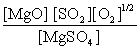
B) 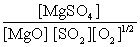
C) 
D) 
E) None of the above expressions is correct.
G) A) and C)
Correct Answer
verified
Correct Answer
verified
A) POCl3 will be consumed as equilibrium is established.
B) POCl will be consumed as equilibrium is established.
C) Chlorine will be consumed as equilibrium is established.
D) The partial pressure of POCl will decrease while the partial pressure of Cl2 increases as equilibrium is established.
E) The volume will have to decrease before equilibrium can be reestablished.
G) B) and E)
Correct Answer
verified
Correct Answer
verified
Correct Answer
verified
a. No effect. Pure solids and liquids ha...View Answer
Correct Answer
verified
View Answer
A) 2.17 × 10⁻⁸
B) 4.10 × 10⁻⁴
C) 7.65 × 10⁻²
D) 7.75
E) none of the above
G) C) and D)
Correct Answer
verified
Correct Answer
verified
A) 0.038 M
B) 0.14 M
C) 0.28 M
D) 1.18 M
E) 2.4 M
G) A) and B)
Correct Answer
verified
Correct Answer
verified
A) There will be no effect.
B) More ammonia will be produced at the expense of hydrogen and nitrogen.
C) Hydrogen and nitrogen will be produced at the expense of ammonia.
D) The equilibrium constant will increase.
E) The equilibrium constant will decrease.
G) A) and C)
Correct Answer
verified
Correct Answer
verified
A) know the kinetic rate law for the reaction.
B) know the mechanism for the reaction.
C) have a properly balanced chemical equation.
D) have values for the concentrations of the reactants.
E) know the limiting reactant.
G) B) and E)
Correct Answer
verified
Correct Answer
verified
A) adding a catalyst
B) adding more N2
C) increasing the pressure
D) lowering the temperature
E) none of the above
G) A) and B)
Correct Answer
verified
Correct Answer
verified
A) 2.4 × 10⁻³¹
B) 9.6 × 10⁻³¹
C) 1.0 × 1030
D) 4.2 × 1030
E) none of the above
G) A) and E)
Correct Answer
verified
Correct Answer
verified
A) 2.5 × 10⁻⁷
B) 6.5 × 10⁻⁴
C) 1.6 × 10⁻²
D) 1.7
E) none of the above
G) All of the above
Correct Answer
verified
Correct Answer
verified
A) The reaction must proceed to the left to establish equilibrium.
B) The reaction must proceed to the right to establish equilibrium.
C) When the system is at equilibrium, the concentrations of the products will be much larger than the concentrations of the reactants.
D) The concentrations of the products are generally larger than the concentrations of the reactants.
E) None of the above statements is true.
G) A) and E)
Correct Answer
verified
Correct Answer
verified
B) False
Correct Answer
verified
Correct Answer
verified
A) removing products as they are formed
B) adding more of a reactant
C) adding a catalyst
D) increasing the pressure, in a gas-phase reaction
E) change in temperature
G) A) and E)
Correct Answer
verified
Correct Answer
verified
A) 3.55 × 10⁻³
B) 1.24
C) 1.47
D) 282
E) 325
G) All of the above
Correct Answer
verified
Correct Answer
verified
B) False
Correct Answer
verified
Correct Answer
verified
A) All the partial pressures will decrease.
B) The partial pressure of methanol will decrease.
C) The partial pressures of hydrogen and methanol will decrease.
D) The partial pressure of hydrogen will increase.
E) The partial pressure of carbon monoxide will decrease.
G) None of the above
Correct Answer
verified
Correct Answer
verified
Correct Answer
verified
Correct Answer
verified
Correct Answer
verified
a. If a stress is applied to a system at...View Answer
Correct Answer
verified
View Answer
A) Kp = Kc
B) Kp = (RT) Kc
C) Kp = (RT) 2Kc
D) Kp = Kc/RT
E) Kp = Kc/(RT) 2
G) A) and E)
Correct Answer
verified
Correct Answer
verified
Showing 21 - 40 of 104
Related Exams