Filters
Question type

Study Flashcards

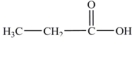
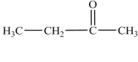
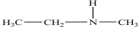
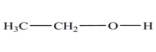
In which of the following compounds will the molecules not form hydrogen bonds with each other?


A) In which of the following compounds will the molecules not form hydrogen bonds with each other? A)    B)    C)    D)    E)
B) In which of the following compounds will the molecules not form hydrogen bonds with each other? A)    B)    C)    D)    E)
C) In which of the following compounds will the molecules not form hydrogen bonds with each other? A)    B)    C)    D)    E)
D) In which of the following compounds will the molecules not form hydrogen bonds with each other? A)    B)    C)    D)    E)
E) In which of the following compounds will the molecules not form hydrogen bonds with each other? A)    B)    C)    D)    E)

F) B) and C)
G) B) and E)

Correct Answer

verifed

verified

If the adhesive forces between a liquid and the walls of a capillary tube are greater than the cohesive forces within the liquid,


A) the liquid level in a capillary tube will rise above the surrounding liquid and the surface in the capillary tube will have a convex meniscus.
B) the liquid level in a capillary tube will rise above the surrounding liquid and the surface in the capillary tube will have a concave meniscus.
C) the liquid level in a capillary tube will drop below the surrounding liquid and the surface in the capillary tube will have a convex meniscus.
D) the liquid level in a capillary tube will drop below the surrounding liquid and the surface in the capillary tube will have a concave meniscus.
E) the liquid level in a capillary tube will be flat.

F) A) and D)
G) A) and E)

Correct Answer

verifed

verified

Which of the following statements is true?


A) The higher the viscosity,the faster a liquid flows.
B) The viscosity increases with increasing temperature.
C) The stronger the intermolecular forces,the higher the viscosity.
D) Hydrogen bonding in water gives rise to its unusually low viscosity.
E) The viscosity of gases is larger than the viscosity of liquids.

F) A) and D)
G) B) and D)

Correct Answer

verifed

verified

___________ ___________ is a special type of dipole-dipole interaction.

Correct Answer

verifed

verified

The energy required to increase the surface of a liquid per unit area is called the


A) capillary action.
B) surface tension.
C) viscosity.
D) cohesion.
E) specific elasticity.

F) C) and E)
G) A) and D)

Correct Answer

verifed

verified

Identify the dominant (strongest)type of intermolecular force present in H2S(g).

Correct Answer

verifed

verified

The maximum number of phases of a single substance which can coexist in equilibrium is two.

A) True
B) False

Correct Answer

verifed

verified

A metal such as chromium in the body-centered cubic lattice has _______________ atom(s) per unit cell.


A) 1
B) 2
C) 3
D) 4
E) 9

F) A) and D)
G) A) and B)

Correct Answer

verifed

verified

Identify the dominant (strongest)type of intermolecular force present in RbCl(s).

Correct Answer

verifed

verified

Below is a representation of liquid water in equilibrium with its water vapor in a rigid container at 35ºC.The circles represent water vapor. Below is a representation of liquid water in equilibrium with its water vapor in a rigid container at 35ºC.The circles represent water vapor.   Which diagram below best represents liquid water in equilibrium with its water vapor at 70ºC? The heat of vaporization of water is 40.7 kJ/mol.(R = 8.314 J/K • mol)  A)    B)    C)    D)    E)   Which diagram below best represents liquid water in equilibrium with its water vapor at 70ºC? The heat of vaporization of water is 40.7 kJ/mol.(R = 8.314 J/K • mol)


A) Below is a representation of liquid water in equilibrium with its water vapor in a rigid container at 35ºC.The circles represent water vapor.   Which diagram below best represents liquid water in equilibrium with its water vapor at 70ºC? The heat of vaporization of water is 40.7 kJ/mol.(R = 8.314 J/K • mol)  A)    B)    C)    D)    E)
B) Below is a representation of liquid water in equilibrium with its water vapor in a rigid container at 35ºC.The circles represent water vapor.   Which diagram below best represents liquid water in equilibrium with its water vapor at 70ºC? The heat of vaporization of water is 40.7 kJ/mol.(R = 8.314 J/K • mol)  A)    B)    C)    D)    E)
C) Below is a representation of liquid water in equilibrium with its water vapor in a rigid container at 35ºC.The circles represent water vapor.   Which diagram below best represents liquid water in equilibrium with its water vapor at 70ºC? The heat of vaporization of water is 40.7 kJ/mol.(R = 8.314 J/K • mol)  A)    B)    C)    D)    E)
D) Below is a representation of liquid water in equilibrium with its water vapor in a rigid container at 35ºC.The circles represent water vapor.   Which diagram below best represents liquid water in equilibrium with its water vapor at 70ºC? The heat of vaporization of water is 40.7 kJ/mol.(R = 8.314 J/K • mol)  A)    B)    C)    D)    E)
E) Below is a representation of liquid water in equilibrium with its water vapor in a rigid container at 35ºC.The circles represent water vapor.   Which diagram below best represents liquid water in equilibrium with its water vapor at 70ºC? The heat of vaporization of water is 40.7 kJ/mol.(R = 8.314 J/K • mol)  A)    B)    C)    D)    E)

F) A) and C)
G) None of the above

Correct Answer

verifed

verified

Select the pair of substances in which the one with the higher vapor pressure at a given temperature is listed first.


A) C7H16,C5H12
B) CCl4,CBr4
C) H2O,H2S
D) CH3CH2OH,CH3-O-CH3
E) Xe,Kr

F) A) and B)
G) B) and C)

Correct Answer

verifed

verified

Which one of the following pure substances will exhibit hydrogen bonding?


A) CH4
B) H2C=CH2
C) H2O
D) CHCl3
E) CHF3

F) A) and C)
G) All of the above

Correct Answer

verifed

verified

What quantity of heat is required to melt 2.00 kg of iron at its melting point (1809 K) ? For iron, ΔHfus = 13.80 kJ/mol.


A) 0.385 kJ
B) 6.90 kJ
C) 27.6 kJ
D) 494 kJ
E) 771 kJ

F) D) and E)
G) B) and C)

Correct Answer

verifed

verified

How many phase changes are represented in the following heating curve of a pure substance? How many phase changes are represented in the following heating curve of a pure substance?   A) 0 B) 1 C) 2 D) 3 E) 4


A) 0
B) 1
C) 2
D) 3
E) 4

F) D) and E)
G) A) and B)

Correct Answer

verifed

verified

In the packing of identical atoms with cubic unit cells,the packing efficiency increases as the coordination number increases.

A) True
B) False

Correct Answer

verifed

verified

Diethyl ether,(CH3CH2) 2O,used as a solvent for extraction of organic compounds from aqueous solutions,has a high vapor pressure,which makes it a potential fire hazard in laboratories in which it is used.How much energy is released when 100.0 g is cooled from 53.0°C to 10.0°C? Normal boiling point 34.5°C Heat of vaporization 351 J/g Specific heat of (CH3CH2) 2O(l) 3.74 J/g • °C Specific heat of (CH3CH2) 2O(g) 2.35 J/g • °C


A) 10.1 kJ
B) 16.1 kJ
C) 21.6 kJ
D) 35.1 kJ
E) 48.6 kJ

F) B) and E)
G) A) and B)

Correct Answer

verifed

verified

The arrow in this phase diagram represents which phase change? The arrow in this phase diagram represents which phase change?    A) sublimation B) deposition C) freezing D) vaporization E) fusion


A) sublimation
B) deposition
C) freezing
D) vaporization
E) fusion

F) A) and E)
G) A) and B)

Correct Answer

verifed

verified

Naphthalene sublimes at room temperature and 1 atmosphere pressure; which statement is true concerning the triple point of naphthalene?


A) The triple point is lower than room temperature.
B) The triple point is higher than room temperature.
C) The triple point is equal to room temperature.

D) A) and B)
E) All of the above

Correct Answer

verifed

verified

Which of the following lacks a regular three-dimensional arrangement of atoms?


A) crystalline solids
B) ionic crystals
C) solids
D) amorphous solids
E) molecular solids

F) B) and C)
G) A) and E)

Correct Answer

verifed

verified

Below is a representation of the unit cell for nickel(II) oxide.How many O2? anions are there in the unit cell? Below is a representation of the unit cell for nickel(II) oxide.How many O<sup>2</sup><sup>?</sup> anions are there in the unit cell?   A) 1 B) 4 C) 8 D) 13 E) 14


A) 1
B) 4
C) 8
D) 13
E) 14

F) None of the above
G) C) and D)

Correct Answer

verifed

verified

Showing 41 - 60 of 135

Related Exams

Show Answer